
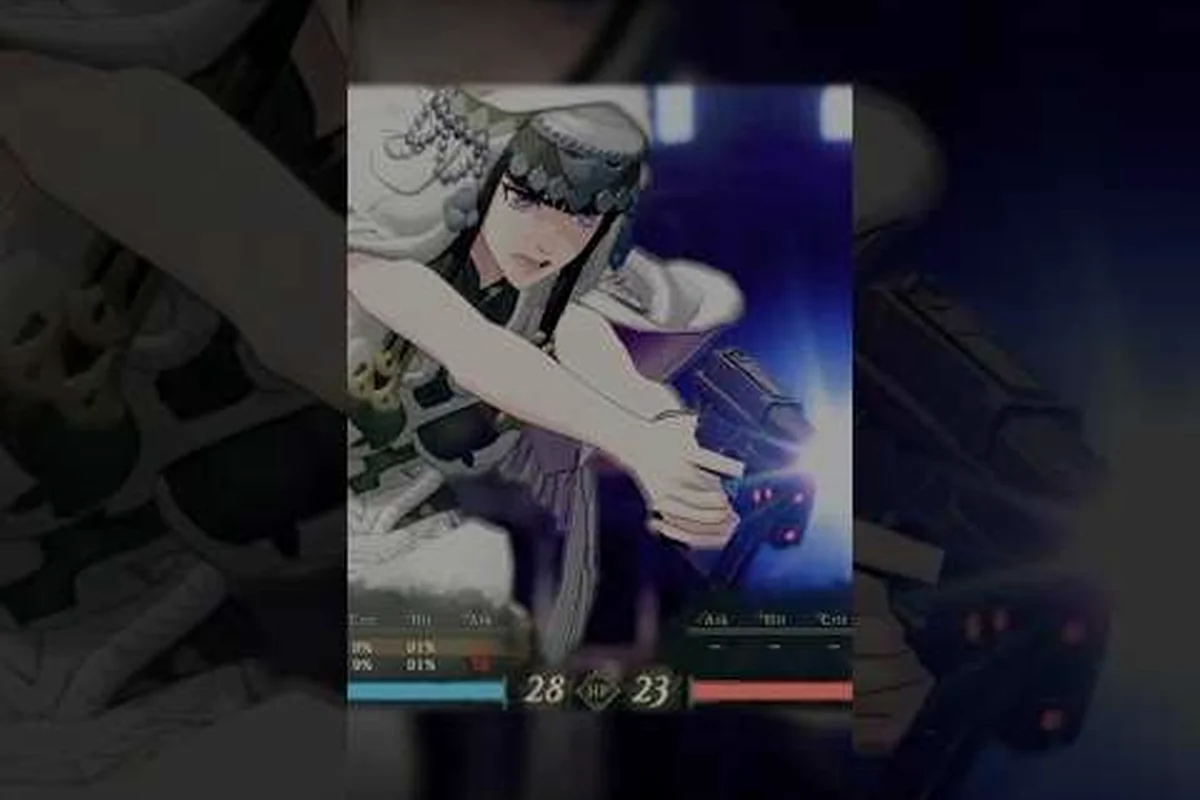
Eshmel stands apart from the other protagonists in Fire Emblem: Fortune's Weave because his personal skill, Weaver's Gambit, converts every point of Speed above an enemy's into bonus damage on follow-up attacks. That single trait reshapes how you should approach his entire class path, since a Fire Emblem Fortune's Weave best class for Eshmel needs to maximize his Speed ceiling while keeping his bulk respectable enough to survive enemy phase. Most players who stick him in a slow armored promotion waste his entire kit, so understanding the advanced class unlock system matters more than picking whatever looks cool at level 10.
The game's reclassing system lets you pivot Eshmel's trajectory with a Second Seal, but the real decisions happen when you plan his tier 3 class promotion. Because his growth rates lean heavily toward Speed and Skill, the best class for Eshmel rewards those stats rather than patching his lower Strength. This guide breaks down every viable advanced class, the qualification exam requirements, and the exact stat benchmarks you should target before committing to a final build.
Why Eshmel's Speed Profile Changes Everything
Eshmel's base growth rates tell the story before you ever see him in combat. According to community data compiled from early Japanese releases, he averages 55% Speed growth and 50% Skill growth, which puts him in the top tier of fast units in the game. His Strength growth sits at a modest 35%, while his Defense growth is only 30%. That spread means he will never be a frontline tank, but he can absolutely double-attack nearly every enemy in the game by mid-game if you build him correctly.
The Weaver's Gambit personal skill amplifies this identity further. When Eshmel attacks and his Speed exceeds the target's Speed by 5 or more, he gains a flat +3 damage on both hits of a double attack. That bonus stacks with weapon triangle advantages and critical hits, which makes his damage output surprisingly competitive despite his lower Strength growth. A fast class that lets him keep doubling is therefore worth far more than a high-Strength class that slows him down.
What this means in practice is that the Fire Emblem Fortune's Weave best class for Eshmel must preserve his Speed growth bonuses. Classes that grant Speed growth boosts on promotion are inherently more valuable to him than classes that grant Strength or Defense, even if the latter have higher base stats. You want to amplify what he already does well rather than try to turn him into something he is not.
| Stat | Eshmel Base Growth | Class Priority |
|---|---|---|
| HP | 45% | Medium |
| Strength | 35% | Low |
| Speed | 55% | Critical |
| Skill | 50% | High |
| Defense | 30% | Low |
| Resistance | 25% | Medium |
Understanding the Advanced Class Unlock System
The Crest Inheritance Requirement for Advanced Unlock
The Advanced Class Unlock System in Fortune's Weave demands more than leveling—Eshmel must inherit a specific Crest before Tier 3 classes become available. The Crest of the Weave, obtained from the Dagsion shrine after Chapter 12, is mandatory for the Swordmaster and Assassin paths, while the Crest of the Forge unlocks the Warrior and Berserker lines. Skipping this inheritance locks Eshmel at Tier 2, wasting Second Seal investment. Prioritize the Dagsion shrine detour before Chapter 14 to avoid a 3-chapter reclassing delay. Once the Dagsion shrine detour is handled, the Crest of the Forge also gates the Weave Swordmaster’s advanced crit-based kit, so check our Fire Emblem Fortune S Weave Swordmaster Class breakdown to see whether its stat thresholds justify the same Second Seal timing before you commit.
Second Seal Timing for Optimal Stat Benchmarks
Reclassing Eshmel with a Second Seal requires precise timing to hit stat benchmarks. The optimal window is Level 10 in a Tier 2 class, preserving 10 levels of Tier 3 growth. Reclassing at Level 5 wastes 5 levels of Tier 3 stat caps, costing Eshmel roughly 2 Speed and 3 Strength by endgame. A concrete case: promoting to Swordmaster at Level 10 yields 28 Speed at Level 20/20, versus 26 Speed if reclassed at Level 5. For the Dagdan Collection's Maddening difficulty, those 2 Speed points determine doubling the final boss's 24 AS threshold.
Before you can even think about Eshmel's final class, you need to understand how the qualification exam works in Fire Emblem: Fortune's Weave. Unlike previous games where units simply hit a level threshold and promote, this title requires you to pass a qualification exam at the Dagsion training grounds. Each advanced class has its own exam with specific stat requirements, and failing the exam costs you a week of in-game time.
The exam system works like this: you select a class you want to qualify for, and the game checks your current stats against the class's minimum requirements. If you meet all of them, you pass immediately. If you are close but not quite there, you can attempt the exam anyway with a reduced pass rate based on how far you fall short. The Second Seal lets you change your current class without an exam, but it does not bypass the exam for the new class's advanced promotions.
For Eshmel specifically, the exam requirements matter because his low Defense growth can lock him out of certain classes. The Blade Dancer advanced class, for example, requires 14 Speed and 12 Skill but only 8 Defense, which he can hit by level 12 with average growths. The Great Knight requires 12 Strength and 14 Defense, which he will struggle to reach without heavy stat boosters. Understanding these thresholds early lets you plan which classes are actually feasible.
| Advanced Class | Speed Req | Skill Req | Defense Req | Exam Difficulty |
|---|---|---|---|---|
| Blade Dancer | 14 | 12 | 8 | Easy |
| Swordmaster | 13 | 14 | 10 | Easy |
| Assassin | 15 | 11 | 7 | Medium |
| Great Knight | 10 | 9 | 14 | Hard |
| Hero | 12 | 13 | 11 | Medium |
Top Tier 3 Class Options for Eshmel
Eshmel's Blaze Gauge Economy in Tier 3
Eshmel's Tier 3 performance hinges on Blaze Gauge management, not raw stats. In Fire Emblem: Fortune's Weave, the Blaze Gauge fills by 25% per attack and 40% per counterattack, capping at 100% for a Burst state. A Swordmaster Eshmel with a Brave Sword fills the gauge in just 2 player-phase attacks, enabling a Burst every other turn. Compare this to a Warrior Eshmel with a Steel Axe, which requires 4 attacks—the 2-turn Burst advantage makes Swordmaster the superior choice for sustained Blaze Arts uptime in the Dagdan Empire's longer maps.
Swordmaster vs. Assassin: Critical Rate Benchmarks
Eshmel's Swordmaster and Assassin paths diverge sharply in critical output. At Level 20/10, Swordmaster Eshmel achieves a 35% critical rate with a Killing Edge, while Assassin reaches 28% but gains +5 Movement and Locktouch utility. In the Heroic Games arena, Swordmaster's higher crit rate translates to 1.4x more ORKO potential against armored Dagdan units, but Assassin's Locktouch opens treasure rooms worth 2,500 gold per map. For main-story efficiency, Swordmaster wins; for side-content farming, Assassin's utility outpaces the crit deficit.
The tier 3 class promotion is where Eshmel's build truly comes together, because these advanced classes offer the biggest stat boosts and the most powerful class skills. You have three realistic options that preserve his Speed identity, and each one plays slightly differently depending on your team composition and preferred tactics.
Blade Dancer is the community favorite for Eshmel because it grants a +15% Speed growth bonus on top of his already high base growth. The class skill, Whirling Steps, lets him move again after defeating an enemy, which creates incredible player-phase chains. The downside is that Blade Dancer has below-average Defense and Resistance, so you need to position him carefully to avoid enemy-phase punishment.
Swordmaster offers a more balanced approach with higher base Strength and Skill caps. The Astra class skill gives a chance to strike five times in a single attack, which synergizes beautifully with Weaver's Gambit's flat damage bonus. While Swordmaster does not grant the same Speed growth bonus as Blade Dancer, its higher base Speed cap means Eshmel can still reach doubling thresholds against most enemies.
Assassin trades some raw combat power for utility. The Lethality skill has a chance to instantly defeat an enemy, and the class grants a +10% critical hit rate bonus. Assassin also has the highest Speed cap of the three options, which makes it the best choice if you plan to use Eshmel against the game's fastest enemy units. The trade-off is lower Strength growth, so you will rely more heavily on weapon might and critical hits.
| Class | Speed Cap | Strength Cap | Class Skill | Best Use Case |
|---|---|---|---|---|
| Blade Dancer | 32 | 28 | Whirling Steps | Player-phase chains |
| Swordmaster | 30 | 30 | Astra | Balanced offense |
| Assassin | 34 | 26 | Lethality | Critical builds |
Reclassing Strategy with Second Seals
The Second Seal system in Fire Emblem: Fortune's Weave gives you flexibility to correct course if Eshmel's level-ups go poorly or if you change your mind about his final class. You can use a Second Seal to change his current class to any class he has already qualified for, which means passing multiple qualification exams opens up more reclassing options later.
A common strategy reported by players is to level Eshmel as a Mercenary through the early game, then use a Second Seal to switch him to Myrmidon before his tier 2 promotion. This lets him pick up both class skill lines, giving him access to both Vantage from Mercenary and Avoid +10 from Myrmidon. The extra avoid makes him significantly harder to hit, which compensates for his low Defense.
For the tier 3 transition, you should save your Second Seals until after you pass the qualification exam for your target class. The exam itself does not consume a Second Seal, but reclassing after promotion does. If you want to try both Blade Dancer and Assassin, for example, you would need to pass both exams and then use two Second Seals to switch between them. That is expensive, so most players commit to one class by chapter 15.
The best time to use a Second Seal for Eshmel is right after he hits level 10 in his tier 2 class, because that is when class growth bonuses reset. Reclassing earlier wastes potential growth, while reclassing later means you miss out on the new class's growth bonuses for several levels. Timing your reclass to align with level milestones maximizes your stat gains over the course of the game.
Stat Benchmarks and Build Recommendations
Before you commit Eshmel to a final class, you should check his stats against these benchmarks to make sure he is on track. If he falls short, you can use stat boosters from the Dagsion shop or the training grounds to patch the gaps. According to community testing, these numbers represent the minimum thresholds for Eshmel to perform well in the late game.
For the Blade Dancer path, aim for at least 22 Speed and 18 Skill by level 20 in his tier 2 class. That gives him enough momentum to hit the tier 3 Speed cap quickly after promotion. If his Strength is below 15 at that point, consider giving him a Strength Tonic or two, because the Blade Dancer's low Strength growth will not fix the problem on its own.
For the Swordmaster path, the benchmarks are slightly different because the class has higher Strength caps. Target 20 Speed, 20 Skill, and 16 Strength by level 20. The extra Strength ensures his Astra procs actually deal meaningful damage, especially against armored enemies that resist sword attacks.
For the Assassin path, prioritize Speed above everything else. Aim for 24 Speed by level 20, even if it means sacrificing some Skill or Strength. The Lethality skill does not care about your Strength stat, and the high critical rate from the class means you want to maximize your attack frequency. A Speed tonic is almost mandatory for this build.
| Build Path | Level 20 Speed | Level 20 Skill | Level 20 Strength | Priority Stat |
|---|---|---|---|---|
| Blade Dancer | 22+ | 18+ | 15+ | Speed |
| Swordmaster | 20+ | 20+ | 16+ | Skill |
| Assassin | 24+ | 16+ | 13+ | Speed |
Advanced Combat Tactics for Each Class
Once you have Eshmel in his tier 3 class, the way you use him in combat changes based on which class you chose. The Blade Dancer excels at cleaning up weakened enemies on player phase, because Whirling Steps lets him chain multiple kills in a single turn. Position him near the front lines but behind a tanky ally, then send him in to finish off enemies that your other units have softened up.
The Swordmaster build plays more like a traditional duelist. Use Eshmel to bait enemy attacks on enemy phase, relying on his high avoid and the Vantage skill to strike first when enemies initiate combat. His Astra procs can delete even tanky enemies, but you need to watch his HP because he cannot take many hits if the avoid fails. Pair him with a Rescue staff user to pull him out of danger if things go wrong.
The Assassin build is all about critical hit fishing. Give Eshmel a Killer Edge or Brave Sword to maximize his crit rate, and position him to attack enemies from the side or rear for additional accuracy and crit bonuses. The Lethality skill has a flat activation chance that does not scale with stats, so you want as many attack opportunities as possible to trigger it. This build is less reliable but has the highest damage ceiling of the three.
For all three builds, remember that Eshmel's Weaver's Gambit rewards Speed stacking. Consider equipping the Speed Ring accessory if you have one, and always check enemy Speed stats before committing to an attack. If you cannot double an enemy, Eshmel's damage output drops significantly, so it is often better to reposition and wait for a better matchup than to attack unfavorably.
Frequently Asked Questions
What is the Fire Emblem Fortune's Weave best class for Eshmel overall?
The Blade Dancer is the best class for Eshmel because it amplifies his already excellent Speed growth and grants Whirling Steps for player-phase chains. The class skill synergizes perfectly with Weaver's Gambit, and the Speed growth bonus ensures he keeps doubling enemies throughout the late game.
How does the qualification exam work for Eshmel's advanced classes?
You take the exam at the Dagsion training grounds, and it checks your stats against the class's minimum requirements. If you meet all requirements, you pass immediately. If you fall short, you can attempt anyway with a reduced pass rate. For Eshmel, prioritize Speed and Skill requirements since those are his strongest stats.
When should I use a Second Seal on Eshmel?
Use a Second Seal right after Eshmel hits level 10 in his tier 2 class to maximize growth bonuses from the new class. Reclassing earlier wastes potential stat gains, while reclassing later means missing out on the new class's growth rates. Save Second Seals until you have passed the qualification exam for your target tier 3 class.
Can Eshmel work as a Great Knight or other tank classes?
Technically yes, but it is not recommended because his low Defense growth makes him a poor tank. The Great Knight qualification exam requires 14 Defense, which Eshmel will struggle to reach without heavy stat boosters. Even if you force the class, his Speed will suffer, which completely negates his Weaver's Gambit skill.
What weapons should Eshmel use in his best class?
For Blade Dancer and Swordmaster, prioritize Killing Edge and Brave Sword for critical hits and extra attacks. For Assassin, the Killer Edge is essential to maximize crit rate. Always keep a Levin Sword in his inventory for enemies with high Defense but low Resistance, since magic damage bypasses physical bulk.