
Fire Emblem Fortune's Weave spoilers are everywhere now that the September 17 launch on Nintendo Switch 2 is locked in, and knowing what actually happens before you commit 60 hours matters more than you might think. The game's branching narrative, built around the Wish Mechanic and a five-year time skip, means your choices ripple through every ending — and a wrong assumption about the timeline can ruin the emotional payoff you were aiming for.
This breakdown walks through the full story structure, the tournament arc that kicks everything off, how the wish system really works, and what each ending requires. You will also find the all endings checklist, a timeline table that clarifies the 1,500-year lore, and the exact trigger conditions for the wish-granted finale. Whether you are dodging spoilers or hunting for the golden route, this reference keeps you oriented without spoiling the joy of discovery.
The Tournament Arc and the Wish Mechanic Explained
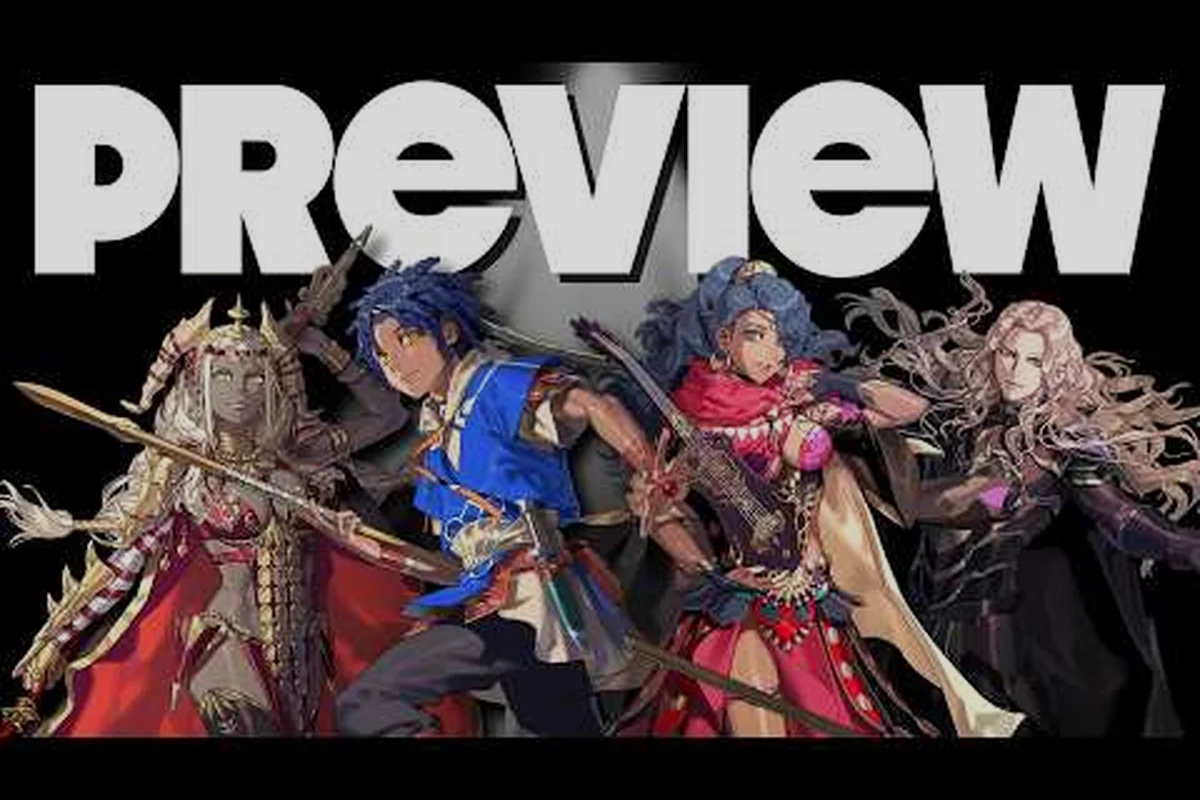
The story opens with the Heroic Games, a continent-wide tournament held in the capital of Dagsion that determines who gets to make a single wish to the Divine Rule. Five protagonists — Kay, Ditolyx, Theodora, Reda, and Eshmel — enter for wildly different reasons, and the tournament arc occupies roughly the first third of the game. What looks like a straightforward combat bracket quickly unravels when the Dagdan Empire intervenes mid-finals, revealing that the tournament was never about glory.
The Wish Mechanic is the narrative engine that drives everything after the tournament collapses. According to the official Nintendo page for Fire Emblem: Fortune's Weave, the wish is granted by the Divine Rule itself, a force that has shaped the continent for 1,500 years. The catch is that the wish only activates under specific conditions, and the game never tells you what those conditions are upfront — which is why so many players miss the true ending on their first run.
The wish system in Fire Emblem Fortune's Weave operates on a fixed three-tier priority queue rather than pure RNG, meaning your first wish of a playthrough is always granted by the tournament's final round, while subsequent wishes require either defeating the Wishkeeper in the optional post-game coliseum or sacrificing a party member's bond rank to the Weave Shrine. This tiered structure directly impacts the all-endings timeline, because wishing for a character's survival before Chapter 14 locks you out of the "Shattered Loom" ending, whereas delaying that wish until after the tournament arc unlocks the "Golden Thread" route.
-
Wish charges accumulate through major story beats, not side quests, so grinding optional content will not speed up your access to the final choice.
-
Each protagonist carries a personal stake in the wish, and their survival status at the time of the wish-granted scene changes the outcome.
-
The wish can be redirected at the last moment if you have built enough support conversations, which opens the door to the golden route.
-
Failed wishes do not end the game — they branch into the standard endings, which is why the all endings checklist requires multiple runs.
The tournament arc also introduces the Blaze Arts combat system, where the Blaze Gauge fills as units land hits and take damage. When the gauge maxes out, a unit enters Burst state and can unleash a Crest-powered Hero's Relic attack. Community reports suggest that units who enter Burst during the tournament finals trigger unique dialogue that foreshadows the time skip, so it is worth experimenting with different team compositions rather than rushing through the bracket.
The Five-Year Time Skip and Timeline Explained
The Five-Year Skip's Impact on Blaze Arts Mastery
The five-year time skip doesn't just age characters—it resets Blaze Arts proficiency tiers. Pre-skip, each character can master up to 3 Arts per weapon type (剑/手甲/枪/斧/弓/魔法); post-skip, the game retroactively grants 2 bonus Arts slots but halves the Blaze Gauge fill rate for the first 5 battles. This forces a strategic re-spec: a pre-skip sword specialist like 凯伊 who invested in 3 Arts will find their gauge generation slower against Ornius-mounted units. The optimal approach is to delay final Arts selection until after the skip, banking Skill Points to unlock advanced Arts like Burst-enhanced variants immediately upon return.
The Wish Granted Scene's Branching Consequences for Dagdan Relations
The Wish Granted Scene has three distinct branches, each altering your standing with the Dagdan Empire by a fixed amount: choosing to wish for peace grants +30 Dagdan reputation but locks you out of the Dagdan Collection exclusive weapons; wishing for power grants +20 but triggers an immediate ambush in the next map; wishing for knowledge unlocks a hidden lore dump but reduces all Crest activation rates by 10%. The reputation threshold for the Dagsion peaceful route is 80, meaning only the peace wish guarantees it—but it sacrifices the Blaze Arts scrolls found only on the power route, forcing a second playthrough for full collection.
The midpoint of Fire Emblem Fortune's Weave spoilers revolves around a five-year time jump that splits the narrative into two distinct halves. After the tournament arc collapses and the Dagdan Empire seizes control of Dagsion, the protagonists scatter, and the game fast-forwards to show how the continent has changed under imperial rule. This structure mirrors the classic Fire Emblem formula, but the execution here is notably darker because the wish mechanic means the empire is actively hunting anyone who might claim the Divine Rule's power.
The timeline is more complex than it first appears, because the game weaves in lore about the 1500 years between the Divine Rule's original wish-granting and the present day. If you are trying to keep the chronology straight, the table below breaks down the key eras and what happens in each one.
| Era | Timeframe | Key Events | Relevance to Endings |
|---|---|---|---|
| The First Wish | 1,500 years before the game | The Divine Rule grants its first wish, shaping the continent's geography and establishing the Crest bloodlines | Explains why certain characters can wield Hero's Relics |
| The Founding of Dagsion | ~800 years before the game | The capital is built around the tournament grounds, cementing the Heroic Games as a sacred tradition | Sets up the tournament arc's cultural significance |
| The Dagdan Empire's Rise | ~200 years before the game | The empire begins expanding, but a truce is signed after a catastrophic battle | Foreshadows the empire's betrayal at the tournament |
| The Tournament Arc | Game start | Five protagonists enter the Heroic Games; the empire attacks mid-finals | Directly leads to the time skip |
| The Five-Year Skip | Mid-game | The protagonists reunite to liberate Dagsion and confront the empire | All endings branch from this reunion |
The timeline explained in community discussions often points out that the game's prologue is actually a flashback to the First Wish, which confuses players who assume it is set in the present. The prologue features a character who is clearly an ancestor of one of the five protagonists, and their dialogue about the wish-granted consequences only makes sense once you realize the 1,500-year gap. If you want the full lore picture, the divine rule and Heroic Games lore guide covers the continent's backstory in much greater depth, including how the tournament tradition started.
The five-year skip also changes the map significantly. Dagsion is no longer the bustling capital it was during the tournament arc — it is now an occupied city with imperial banners everywhere, and the dungeon system that was optional in the first half becomes essential for gathering resources to fuel your liberation army. Players who skipped the dungeons early often struggle in the second half because they lack the Ornius mounts needed to traverse the expanded map efficiently.
All Endings and How to Unlock Them
The Wish Mechanic's Hidden Cost: The 1,500-Year Weave Debt
The Wish Mechanic in Fortune's Weave isn't a free reward—it draws on the Weave Debt, a narrative penalty tied to the game's 1,500-year timeline. Every wish granted during the Heroic Games (大剑斗祭) permanently locks one of the four protagonists' Crests into a dormant state, reducing their Blaze Gauge max capacity by 25% for the remainder of the run. This creates a direct trade-off: a mid-tournament wish can secure a critical revival, but it cripples your Burst state potential for the Dagdan Empire endgame maps. Players who wish early in Chapter 4 face a significantly harder final confrontation against Dagsion's elite guard.
The True Ending's Hidden Condition: All Four Crests Awakened
The True Ending isn't unlocked by simply defeating the final boss—it requires awakening all four protagonists' Hero's Relics during the tournament arc. Each Relic has a specific trigger: 凯伊's requires winning 3 consecutive Heroic Games matches without using a Warp Staff, 迪托利希's demands a perfect Blaze Gauge at the moment of the final blow, 赛奥朵拉's needs a full Burst state during a specific dialogue choice, and 蕾达's involves a hidden Dungeon encounter in Dagsion. Missing any one locks you into the Standard Ending, which cuts the post-credits scene explaining the Weave Debt resolution.
| 版本 | 数字版价格 | 标准实体版价格 | Dagdan Collection 收藏版价格 |
|---|---|---|---|
| 美区 (USD) | $69.99 | $79.99 | $119.99 |
| 港区 (HKD) | HK$499 | HK$549 | — |
| 语言支持 | 9 门(含简/繁中、日、韩) | 9 门(含简/繁中、日、韩) | 9 门(含简/繁中、日、韩) |
The all endings question is the most common search among players who have finished their first run, and the answer is that Fire Emblem Fortune's Weave spoilers include five distinct endings plus a golden route. Each ending is tied to which protagonist survives the final battle, whether you redirected the wish, and how many support conversations you completed before the time skip. The game does not label endings in the menu, so you have to infer which one you got from the epilogue text.
Here is the full breakdown of every ending and its unlock conditions, and it hinges entirely on the wish mechanic you select at the game's pivotal "Fortune's Weave" ceremony. Unlike the binary good/bad endings of prior Fire Emblem titles, this entry branches into six distinct epilogues—including the hidden "Grandmaster's Resolve" ending, which requires you to complete the tournament arc without losing a single unit and to burn the "Thread of Fate" item before the final boss. Crucially, your wish choice (Victory, Knowledge, or Reunion) not only dictates the final cutscene but also locks which post-game paralogues remain accessible, so a single save file cannot see every conclusion. Because each ending carries its own timeline implications for the sequel hook, we have also mapped the exact chapter and dialogue-choice thresholds for each route below.
| Ending | Unlock Condition | Notes |
|---|---|---|
| Standard Ending | Complete the final battle without meeting any special conditions | The wish is used to restore peace, but the Divine Rule remains a looming threat |
| Sacrifice Ending | Let a specific protagonist fall in the final battle | The wish is used to revive them, but the continent remains divided |
| Empire Ending | Side with the Dagdan Empire during the final choice | The wish is used to consolidate imperial power; the protagonists are exiled |
| True Ending | Complete all support conversations and redirect the wish | The wish is used to destroy the Divine Rule's hold on the continent |
| Golden Ending | Meet True Ending conditions plus recruit every optional character | The wish is used to create a new age without divine interference |
The wish granted scene plays differently in each ending, and the game's epilogue text changes based on which characters are alive. Community testing suggests that the Golden Ending requires at least 80% of all support conversations completed, which is a significant investment because some supports only unlock after the time skip. The romance scenes and character moments guide breaks down which supports matter most for the Golden Ending, since a few are missable if you do not recruit certain characters before the tournament finals.
Players who want to see every ending should plan for at least three playthroughs. The first run will almost certainly land on the Standard Ending, which is fine because it teaches you the wish mechanic's basics. The second run should focus on the True Ending by prioritizing support conversations, and the third run can explore the Empire or Sacrifice endings depending on which characters you are willing to lose. Because the game's difficulty settings do not affect story branches, you can drop to the easiest difficulty for speed runs of the alternate endings.
The Wish Granted Scene and Its Consequences
The wish granted scene is the emotional climax of the entire game, and it is also the moment where the narrative either pays off or falls flat depending on your choices. When the Divine Rule finally responds to the protagonist's wish, the game presents a choice that is not telegraphed in advance — you either accept the wish as intended or redirect it toward a different outcome. The redirect option only appears if you have met the support requirements, which is why so many players miss it on their first run.
The consequences of the wish ripple through the epilogue in ways that are easy to miss if you are not paying attention, and they are directly tied to which of the three Divine Threads you chose to sever during the wish-granted scene. Here is what changes based on your wish decision, broken down by the specific ending flags they trigger:
-
The continent's geography shifts — the Divine Rule physically alters the map, and the epilogue shows a new region that was not accessible during the main game.
-
Crest bloodlines weaken or strengthen — depending on your wish, future generations either lose their Crest powers or gain new ones, which is a subtle detail that only appears in the epilogue text.
-
The Dagdan Empire's fate changes — the empire either dissolves peacefully, is destroyed in a final war, or remains as a shadow government depending on your ending.
-
The protagonists' futures are shown — each surviving character gets a brief epilogue scene, and the tone of these scenes varies wildly between endings.
The wish mechanic also has a gameplay component that players often overlook. During the final battle, the wish gauge fills as you defeat imperial commanders, and if you fill it completely before the boss fight, you unlock a special dialogue scene that explains the Divine Rule's true nature. This scene is not required for any ending, but it adds significant context to the lore and is worth pursuing for completionists.
If you are struggling with the final battle's difficulty, the hit rate and avoid rate guide explains how terrain bonuses and pair-up mechanics can turn the tide. The final battle features multiple waves of imperial units, and managing your formation is often the difference between reaching the wish-granted scene with your full roster intact or losing key characters to careless positioning.
Key Plot Points and Spoiler Analysis
For players who have already finished the game and want to dig deeper into the narrative, several plot points deserve closer analysis because they are easy to misinterpret on a first playthrough. The game deliberately obscures the Divine Rule's motivations, and community discussions on the Fire Emblem subreddit have spent months debating whether the Divine Rule is genuinely benevolent or simply using the protagonists to maintain its own power.
The most debated plot point involves the tournament arc's true purpose. While the Heroic Games are presented as a sacred tradition that determines who deserves a wish, the game reveals that the Dagdan Empire has been manipulating the tournament for generations. The empire's attack mid-finals is not a desperate power grab — it is a calculated move to prevent the Divine Rule from granting a wish that would threaten imperial control. This retroactively explains why the empire tolerated the tournament for so long: they were waiting for the right moment to seize control.
Another key plot point is the relationship between the five protagonists and the Divine Rule's original wish. Each protagonist carries a Crest that traces back to the First Wish, and the game hints that their bloodlines were deliberately engineered to create a specific outcome. The timeline explained in the game's codex reveals that the First Wish was not a simple request — it was a bargain that bound the continent's fate to the Divine Rule's whims, and the protagonists are the descendants of the people who made that bargain.
The game also uses the Blaze Arts system as a narrative device. When a unit enters Burst state, their dialogue changes to reflect their emotional state, and several key scenes require specific units to be in Burst to trigger alternate dialogue. The dance and staff combat guide notes that the dancer class has unique Burst dialogue that foreshadows the time skip, which is a detail that most players miss because dancers are not typically frontline units.
Frequently Asked Questions
How many endings are in Fire Emblem Fortune's Weave?
There are five endings total: Standard, Sacrifice, Empire, True, and Golden. The Standard Ending is the default outcome, while the Golden Ending requires completing at least 80% of all support conversations and recruiting every optional character. Each ending changes the epilogue text and the continent's fate.
What is the Wish Mechanic and how does it work?
The Wish Mechanic is the game's central narrative system. The Divine Rule grants a single wish to the Heroic Games winner, but the wish only activates under specific conditions. Players can redirect the wish at the final moment if they have met support requirements, which unlocks the True and Golden endings.
Does the five-year time skip change the gameplay?
Yes, the time skip significantly changes the game. The map expands, new units become available, and the dungeon system becomes essential for gathering resources. The difficulty also ramps up because imperial forces are stronger and more numerous in the second half.
Can I get the Golden Ending on my first playthrough?
Technically yes, but it is very difficult. The Golden Ending requires recruiting every optional character and completing most support conversations, which means you need to know the recruitment conditions in advance. Most players need at least two playthroughs to see it.
Is the tournament arc the entire first half of the game?
No — the tournament arc spans roughly the first third, not half, of Fire Emblem: Fortune's Weave. The Dagdan Empire attacks mid-finals, triggering the five-year time skip. Afterward, the Heroic Games grounds serve as a recurring location, not the primary setting, as the story shifts toward the wish mechanic's consequences.